Wheel Alignment Specs Explained
If you’ve ever been told your vehicle needs an alignment, you’ve probably heard terms like “camber,” “caster,” and “toe” thrown around. These aren’t just technical jargon. They’re the core wheel alignment specs that determine how your vehicle handles, how your tires wear, and how safe your drive feels on the road.
For drivers in Kansas City, where road conditions, weather shifts, and daily driving all take a toll on suspension systems, understanding wheel alignment specs isn’t optional; it’s practical. It helps you make informed decisions the next time you visit a tire shop or schedule a wheel alignment in Kansas City.
Let’s break it down in a way that actually connects to what you feel behind the wheel.
What Are Wheel Alignment Specs?
Wheel alignment specs refer to the precise angles at which your wheels are set relative to your vehicle’s suspension and the road. These angles are measured in degrees and fractions of degrees. Even small deviations can create noticeable problems.
Modern vehicles are engineered with exact alignment targets. When your alignment is off (even slightly), you’ll start to see symptoms such as:
- Uneven or accelerated tire wear
- Steering pulling to one side
- A crooked steering wheel when driving straight
- Reduced fuel efficiency
- Less predictable handling
Alignment isn’t guesswork. At a professional auto repair shop like TMS Auto Repair, technicians use digital alignment systems to measure and adjust these specs back to manufacturer standards.
The Three Core Alignment Angles
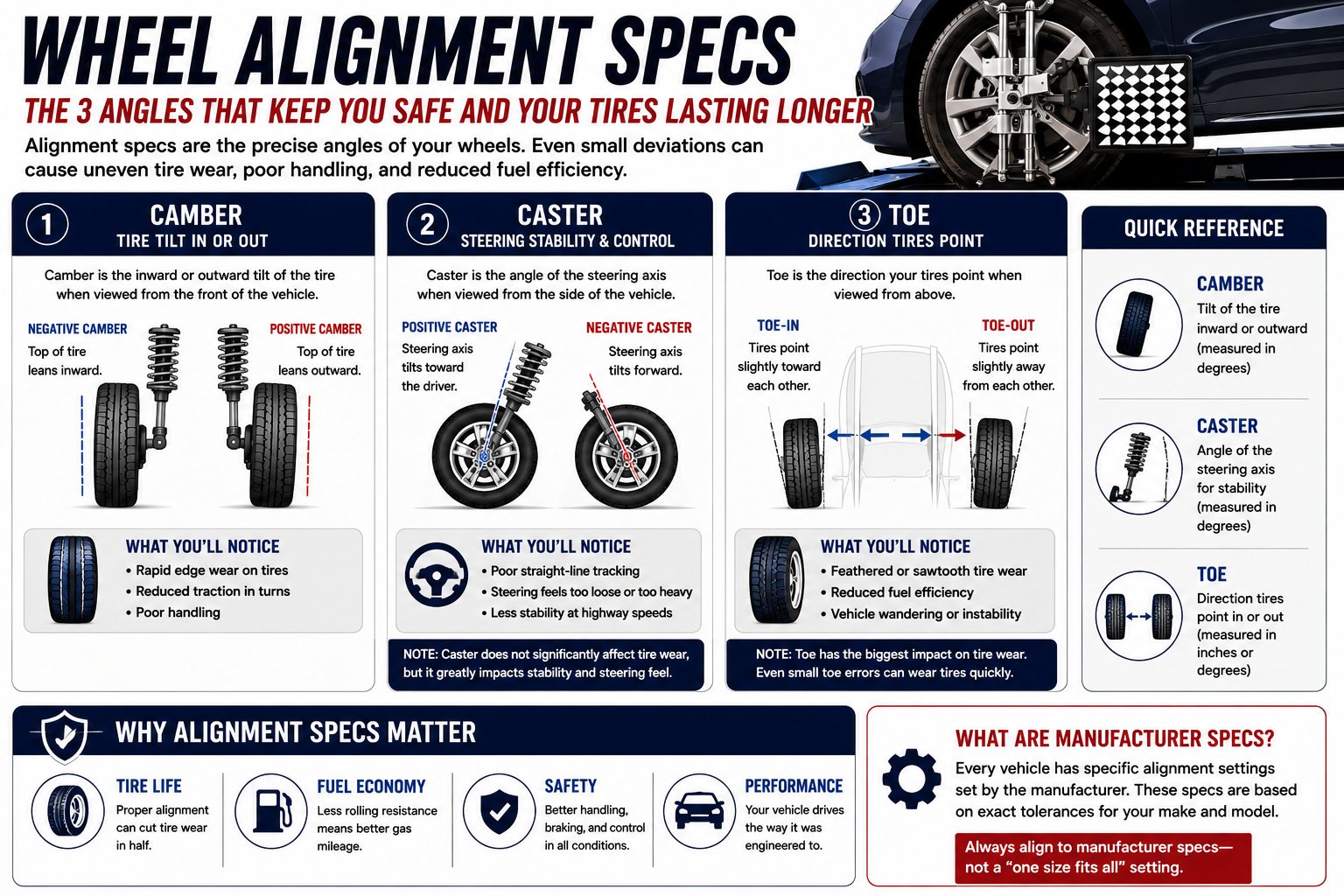
Camber: Tire Tilt In or Out
Camber describes the inward or outward tilt of the tire when viewed from the front of the vehicle.
- Negative camber: Top of the tire leans inward
- Positive camber: Top of the tire leans outward
A small amount of camber is often incorporated into vehicles to improve handling stability, but too much can cause uneven tire wear, usually on the inside or outside edges.
What you’ll notice:
- Rapid edge wear on tires
- Reduced traction during cornering
Caster: Steering Stability and Control
Caster refers to the angle of the steering axis when viewed from the side of the vehicle.
- Positive caster: Steering axis tilts toward the driver
- Negative caster: Steering axis tilts forward
Most modern vehicles use positive caster because it improves straight-line stability and steering return (how the wheel naturally centers after a turn).
What you’ll notice:
- Poor straight-line tracking if out of spec
- Steering that feels too loose or too heavy
Caster doesn’t directly cause tire wear, but it significantly affects how your vehicle feels at highway speeds.
Toe: Direction the Tires Point
Toe is the most critical and commonly adjusted alignment spec. It measures whether your tires point inward or outward when viewed from above.
- Toe-in: Tires point slightly toward each other.
- Toe-out: Tires point slightly away from each other.
Even a minor toe misalignment can quickly destroy a set of tires.
What you’ll notice:
- Feathered or sawtooth tire wear
- Reduced fuel efficiency
- Vehicle wandering or instability
If you’re shopping for tires online or have just had new tires installed, incorrect toe settings can dramatically shorten their lifespan.
Why Alignment Specs Matter for Kansas City Drivers
Kansas City roads aren’t perfectly smooth. Between potholes, curb impacts, seasonal temperature changes, and daily commuting, alignment angles shift over time.
That’s why regular checks at a trusted tire shop in Kansas City matter.
Misalignment doesn’t just affect comfort. It directly impacts:
- Tire life: Improper alignment can cut tire lifespan in half.
- Fuel economy: More rolling resistance means more fuel used.
- Safety: Poor alignment reduces braking and cornering control.
At TMS Auto Repair, alignment services are treated as a precision process, not a quick add-on. The goal is to restore factory specs so your vehicle performs the way it was engineered to.
How Alignment Specs Are Measured and Adjusted
Modern alignment systems use sensors and cameras mounted to each wheel. These systems compare your vehicle’s current angles to manufacturer specifications in real time.
Here’s what the process typically includes:
- Initial Inspection: Technicians check suspension components, tire condition, and steering parts. Alignment adjustments only work if the underlying hardware is in good shape.
- Digital Measurement: The system captures camber, caster, and toe readings for all four wheels.
- Adjustment: Technicians adjust tie rods, control arms, or other suspension components to bring angles back into spec.
- Verification: Final measurements confirm everything is within acceptable tolerance.
This is why choosing the right auto repair shop matters. Alignment requires both the right equipment and the experience to interpret the data correctly.
Signs You Need a Wheel Alignment
Most drivers don’t check alignment specs manually, but your vehicle will tell you when something’s off.
Watch for these signs:
- Your steering wheel isn’t centered.
- The car pulls left or right.
- Tires show uneven wear patterns.
- Steering feels unstable at higher speeds.
- You’ve recently hit a pothole or curb.
If any of these sound familiar, it’s time to schedule a wheel alignment in Kansas City before the issue turns into premature tire replacement.
Alignment and New Tires: What Most Drivers Miss
A common mistake is installing new tires without checking alignment. If your previous tires wore unevenly, your alignment was already off.
Putting new tires on a misaligned vehicle just resets the problem and accelerates wear on a fresh set.
If you’re planning to shop for tires online or replace your current set, pairing that with a professional alignment is the most cost-effective move you can make.
Why TMS Auto Repair Approaches Alignment Differently
At The Maintenance Shop in Gladstone, alignment isn’t treated as a quick service. It’s part of a broader commitment to accurate, high-quality auto repair. With more than 20 years of experience serving the Kansas City area, the team focuses on:
- Precision diagnostics, not assumptions
- High-quality parts and equipment
- ASE-certified technicians
- Transparent communication about what your vehicle actually needs
Whether you’re dealing with uneven tire wear or just want to protect a new set of tires, their alignment service is built around getting it right the first time.
Financing Tires and Alignments Together Can Prevent Repeat Wear
One of the most common mistakes drivers make is replacing worn tires without correcting the alignment issue that caused the wear in the first place. While you got the tire size specs right, a fresh set of tires installed on a misaligned vehicle can start wearing unevenly almost immediately.
That’s why many drivers choose to finance both tire replacement and wheel alignment services together through their local tire shop. Instead of handling only part of the problem, financing allows drivers to correct the root issue while protecting the lifespan of the new tires.
Many shops now offer financing for:
- New tires
- Wheel alignment service
- Tire balancing
- Suspension-related corrections
- TPMS and related tire services
For drivers already investing in a new set of tires, pairing the replacement with a proper alignment is often the most cost-effective long-term decision.
Why Alignment Specialists Matter More Than General Service Centers
Wheel alignment is not just a basic maintenance item. Small changes in camber, caster, or toe can dramatically affect tire wear, steering feel, and highway stability.
Dedicated tire and alignment shops typically spend more time analyzing:
- Uneven tread wear patterns
- Steering pull and instability
- Suspension geometry changes
- Tire wear caused by potholes or curb impacts
- Real-world driving conditions and load distribution
Instead of simply installing new tires and moving on, alignment-focused shops work to ensure the vehicle is actually tracking correctly afterward.
For drivers dealing with uneven wear or steering issues, that precision-focused approach can make a major difference in tire lifespan and overall vehicle performance.
Get Your Alignment Checked Before It Costs You
If your vehicle isn’t driving straight or your tires are wearing unevenly, don’t wait. Small alignment issues turn into expensive problems fast.
Schedule your service with a trusted tire shop in Kansas City that understands precision.
Book your alignment with TMS Auto Repair today and get your vehicle driving the way it should.